
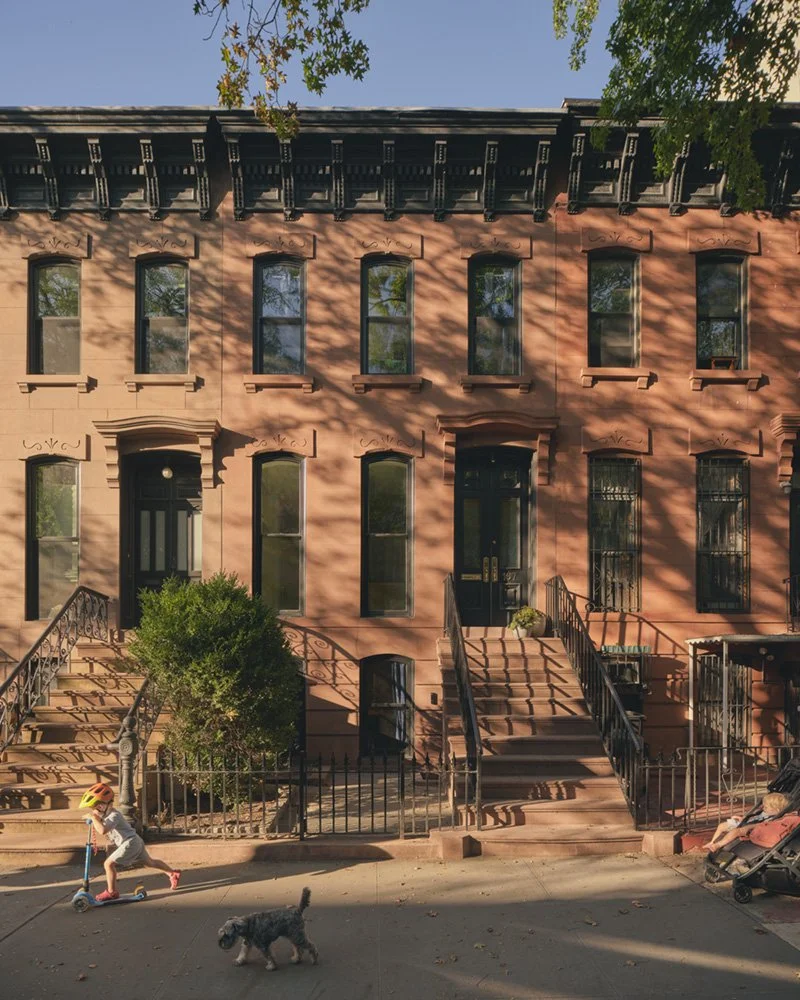
Buying a New York townhouse often means buying a renovation project along with the property. Before making an offer, it’s important to understand not only the building’s existing condition, but what it could become - and what it may take to get there.
From zoning and landmark restrictions to structural conditions, outdated building systems and opportunities for expansion, here are ten things we look for when evaluating a townhouse before purchase.
1. Will the building’s legal use need to change, and what are the implications?
Changing a property’s legal use typically requires additional design and permitting work and may trigger certain code upgrades. In most townhouse renovations, however, it is a manageable part of the process rather than a major obstacle.
2. Is the property landmarked?
If the property is in a designated historic district or is an individual landmark, exterior work generally requires approval from the NYC Landmarks Preservation Commission (LPC). That can affect everything from windows and doors to rooftop or rear additions. It doesn’t necessarily limit what you can do, but it can influence the design, cost and timeline - so it’s important to understand the implications early.
3. Can - and should - you expand?
Many NYC townhouses have opportunities for expansion - at the rear, roof, or sometimes both.But available floor area doesn’t necessarily mean expansion is the right decision. Zoning, landmarks, structural work and construction costs all need to be weighed against the value and quality of the additional space.
4. Assume the building systems need work
In a historic home, unless a comprehensive renovation has been completed relatively recently, expect that the electrical, plumbing, heating and cooling systems to require significant upgrades or replacement. Understanding their condition early is important - both for establishing a realistic renovation budget and for deciding how extensively to renovate.
5. Is this the time to go all-electric?
A major renovation is an ideal opportunity to reconsider how the house is heated, cooled and supplied with hot water. Modern heat-pump systems can provide highly efficient heating and cooling, making it possible to eliminate an aging steam boiler — and, in some cases, transition the entire home away from fossil fuels.
6. Look beyond the finishes
Beautiful finishes can distract from what is happening underneath them. Sloping floors, cracks, water damage or movement in stairs and walls can point to structural conditions that deserve closer investigation. In an older townhouse, understanding the underlying structure can be far more consequential to the renovation budget than the condition of the kitchen or bathrooms.
7. Be aware of unpermitted work
Alterations made over many decades don’t always match the property’s approved drawings or current legal condition. During a major renovation, some of that work may need to be legalized, modified or removed. Identifying these conditions before purchase can help avoid surprises during design and permitting.
8. How far do you want to take performance?
A major renovation is also the best opportunity to fundamentally improve how a home feels and performs — from thermal comfort and indoor air quality to quiet interiors and energy use. High-performance upgrades can range from better windows, insulation and all-electric systems to a full Passive House retrofit. Establishing those goals early helps determine what is practical and allows the work to be integrated efficiently into the overall renovation.
9. What should be restored - and what should be replaced?
One of the opportunities of renovating a historic townhouse is deciding what deserves to remain. Original doors, millwork, mantels, plasterwork and other architectural details can give a house a character that is difficult to recreate. The right approach is rarely to restore everything or replace everything, but to understand what is valuable and integrate it thoughtfully with the new.
10. Understand the renovation before you make the offer
Comparable sales can tell you what similar properties have sold for. They can’t tell you what this particular house can become, what constraints it carries, or what it may cost to turn it into the home you want.
A pre-purchase townhouse consultation can help identify the opportunities and risks before you commit - from layout and expansion potential to zoning, landmarks, building systems, likely construction scope and budget. When a property requires a significant renovation, understanding those implications can be just as important as understanding the purchase price.