The Wedge
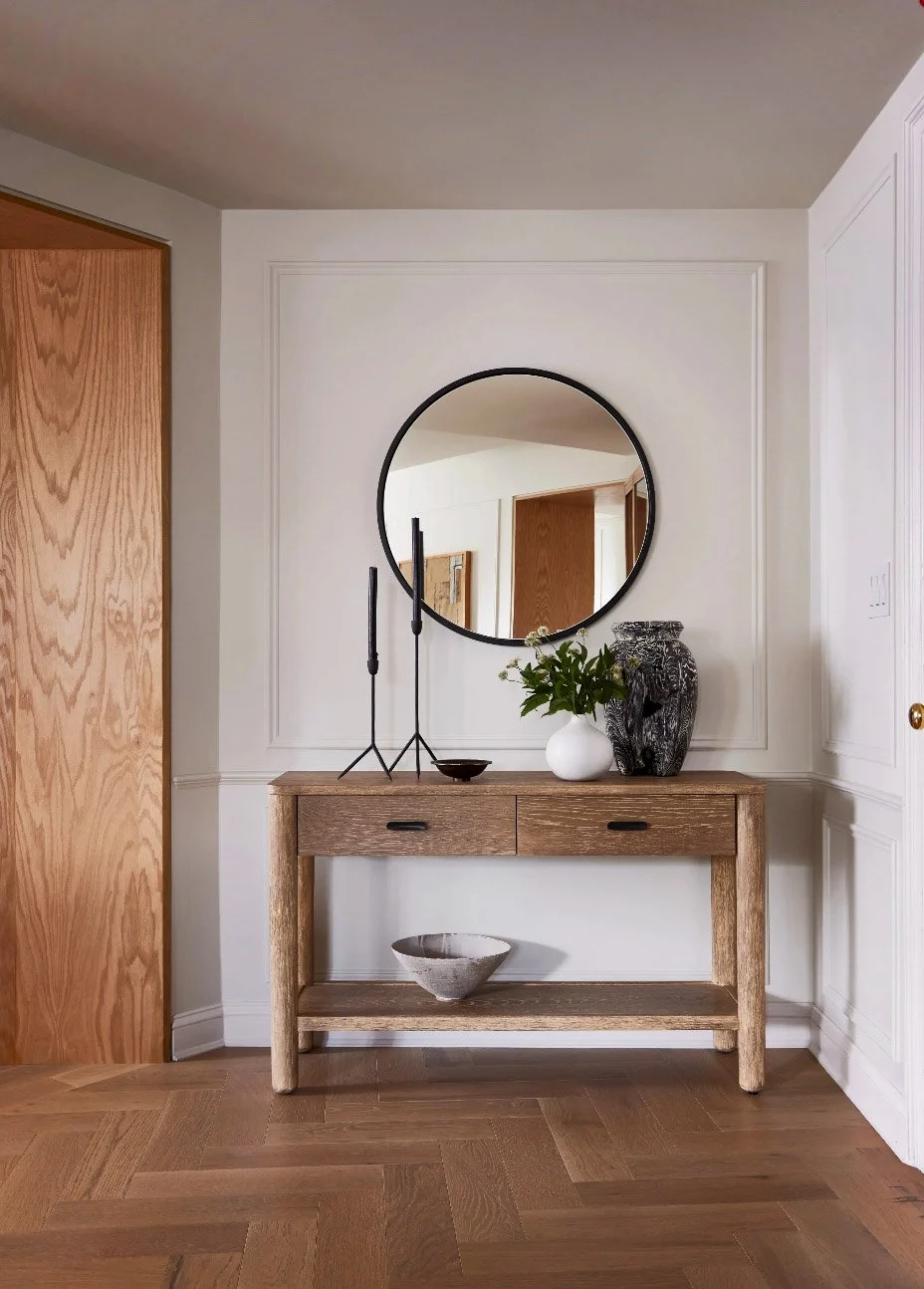
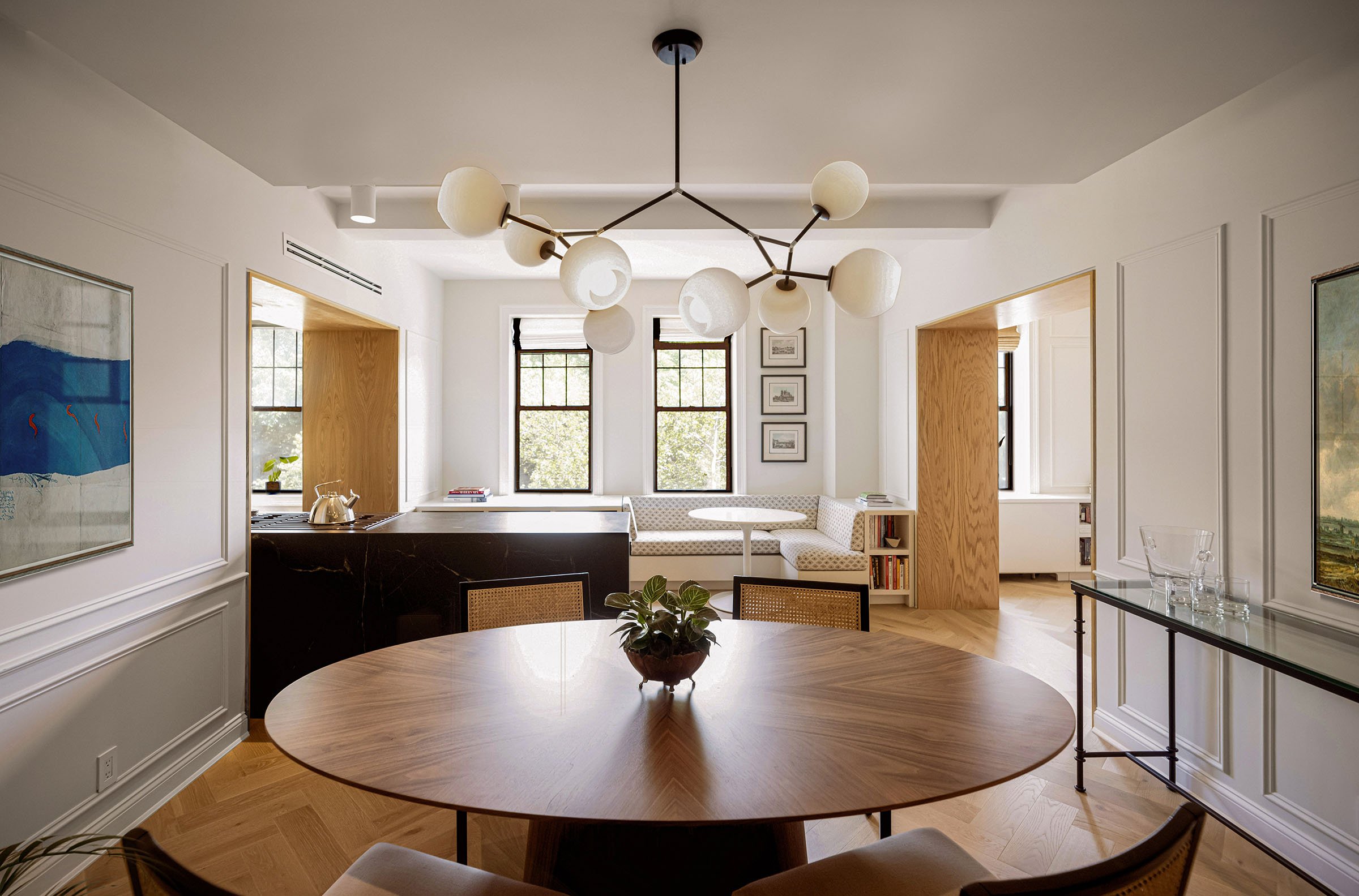
The Wedge is a renovation of an unconventional triangular apartment in Brooklyn. Central to the project is the dialogue between old and new — rather than concealing the existing structure, we let the building's columns and beams help organize the plan, and threaded new mechanical systems seamlessly through custom millwork. Through thoughtful, creative planning and finely crafted architectural details, we transformed the space into a sophisticated, light-filled home that feels clean, bright, and timeless.
Photography by Blue Slate Films & Pernille Loof
The Plan
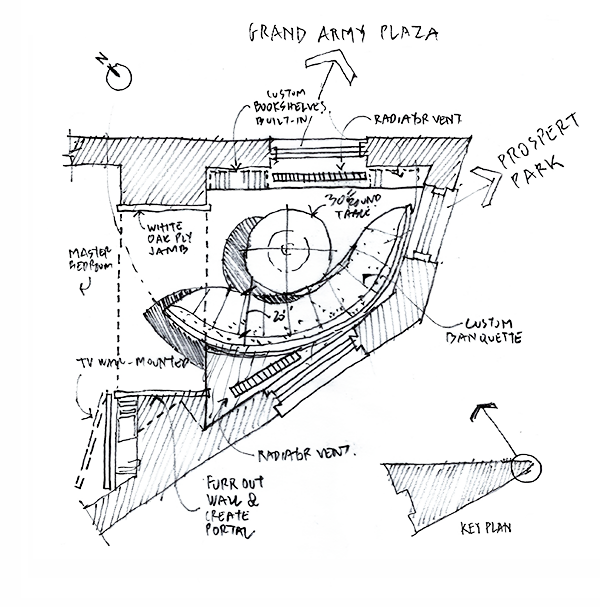
For this project, we developed a thoughtful layout that responded to the apartment’s unconventional geometry while elevating it to contemporary standards of living. Rather than fight the triangular footprint or hide the existing structure, we let the building’s columns and beams help organize the plan — weaving them into a coherent composition where clarity, balance, and flow are born from what was already there.
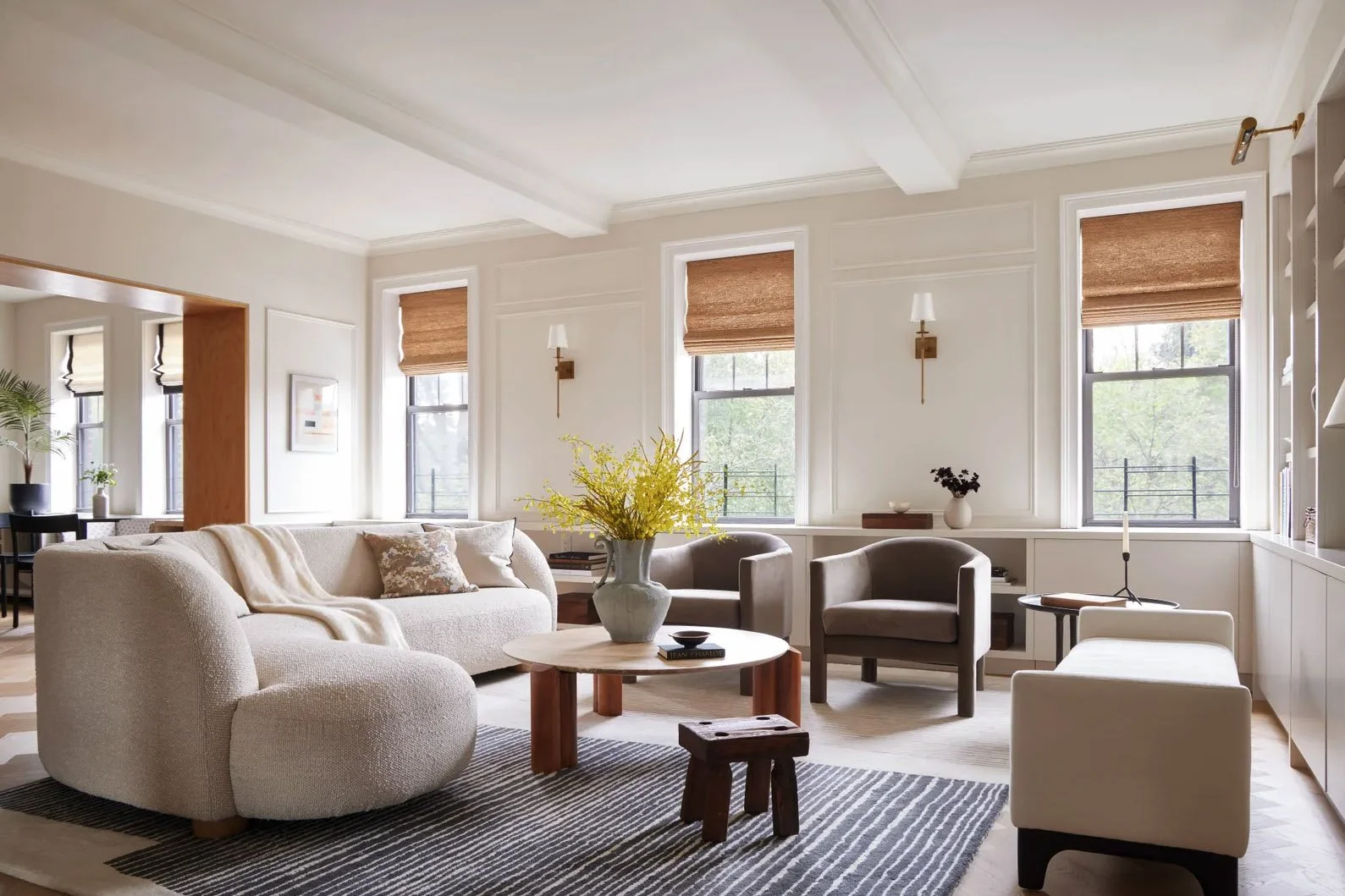
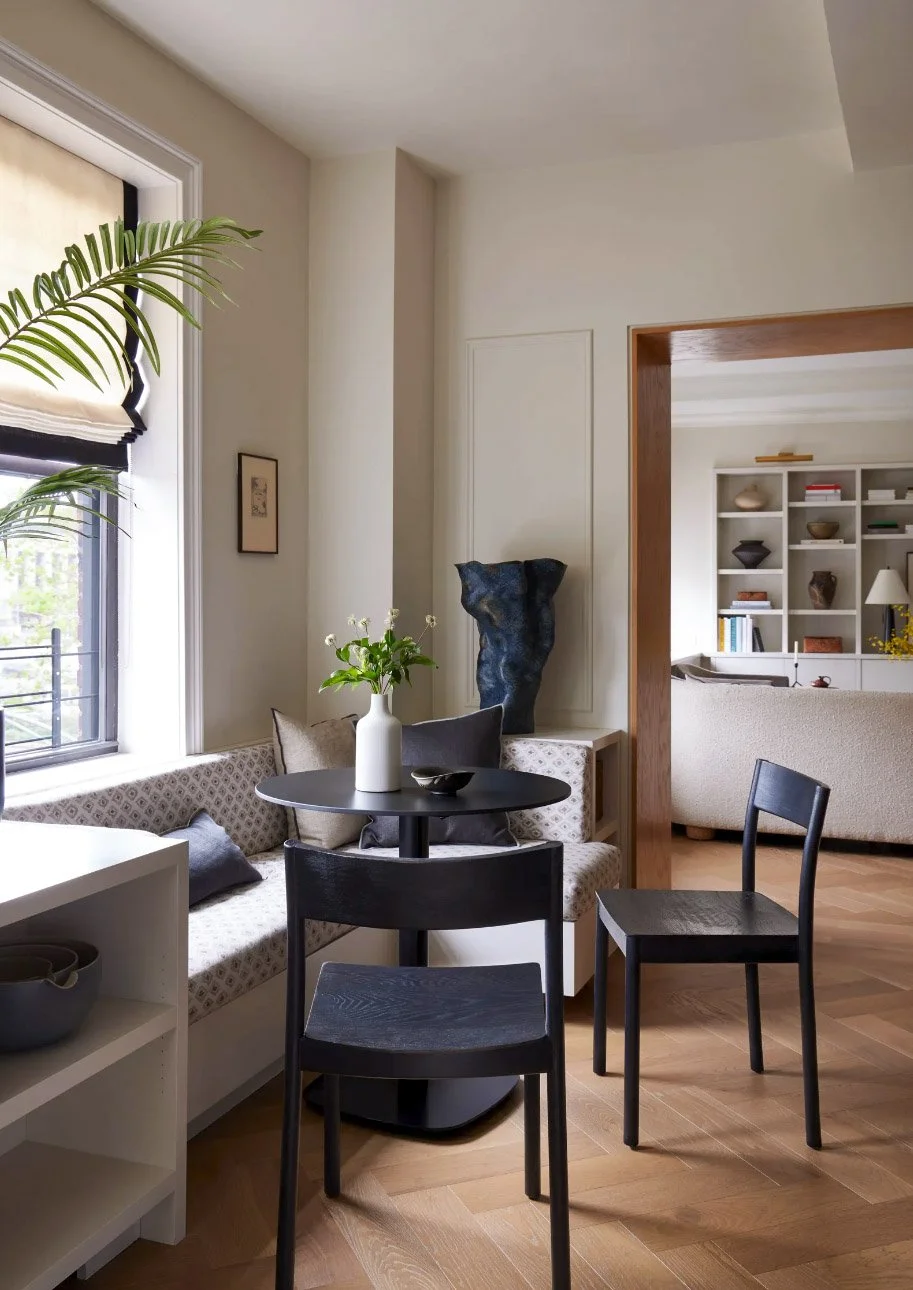
Two substantial wall partitions with large cased openings organize nearly half of the apartment into three distinct yet interconnected zones: kitchen, dining, and living. These framed openings guide movement, align sightlines, and preserve a sense of openness, to allow each space to feel defined without becoming isolated.
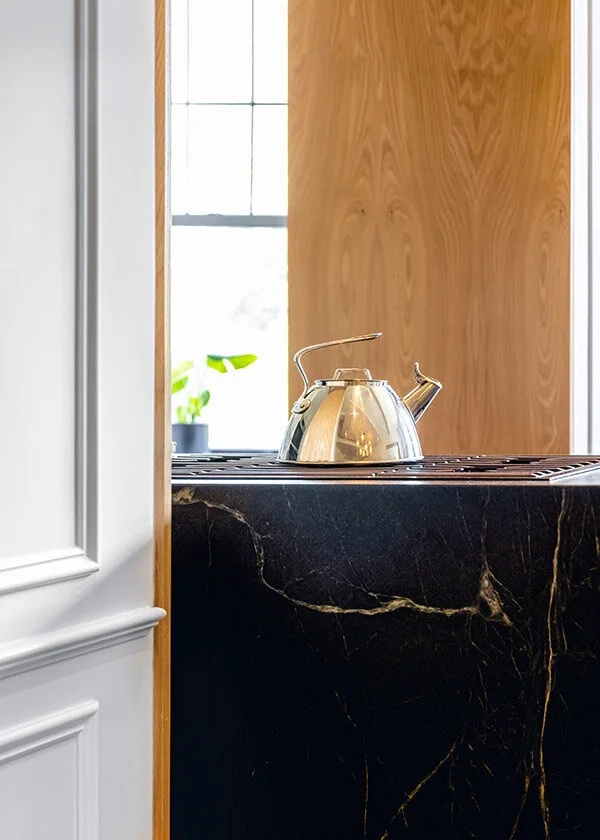
At the center of the composition, the kitchen island becomes a sculptural focal point. Wrapped in black soapstone, the monolithic element is oriented perpendicular to the primary kitchen run and intentionally slices through one of the cased openings, visually and physically linking the kitchen to the dining area.
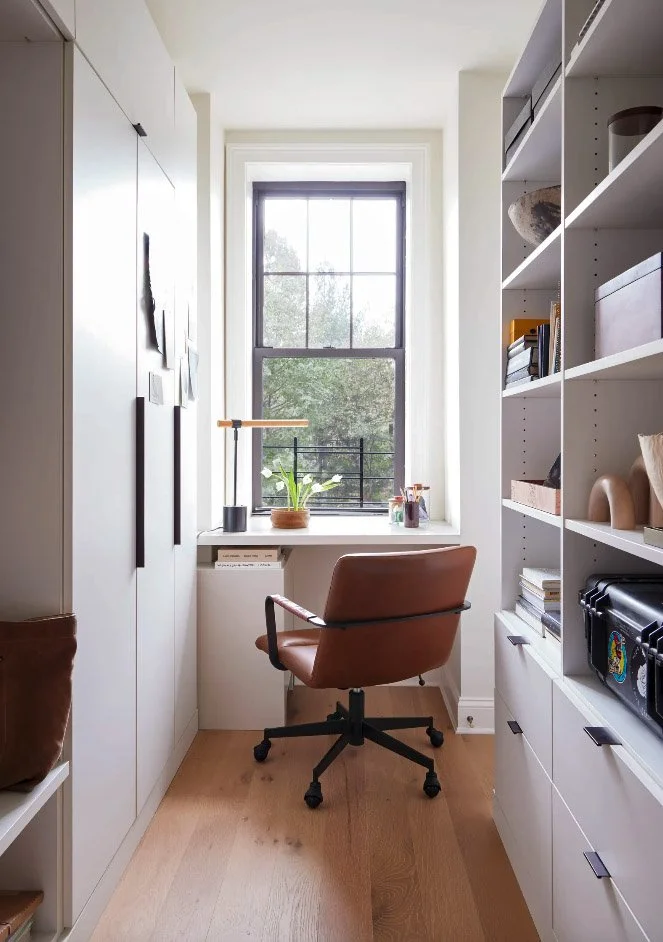
Throughout the dining and living spaces, custom millwork further shapes the interior. A built-in banquette creates a breakfast nook, while integrated bookcases, shelving, and a continuous millwork element quietly absorb the apartment’s mechanical needs — concealing radiators, a new air-conditioning unit, and ductwork behind precise, seamless surfaces. The result is generous storage and display without visual clutter, reinforcing the apartment’s cohesive, tailored character.
Sustainability
Our team significantly improved energy performance by insulating all exterior walls and replacing inefficient window air-conditioning units with a high-efficiency HVAC system carefully integrated to preserve ceiling height and provide even air distribution throughout the apartment. The new system cools the home using a fraction of the energy previously required. Opening up the floor plan introduced substantially more daylight, which — combined with energy-efficient LED lighting — has dramatically reduced lighting demand. A new mechanical exhaust system further improves air quality, and we specified low-VOC paints and low-formaldehyde plywood and cabinetry to support a healthier indoor environment.