Oculus House
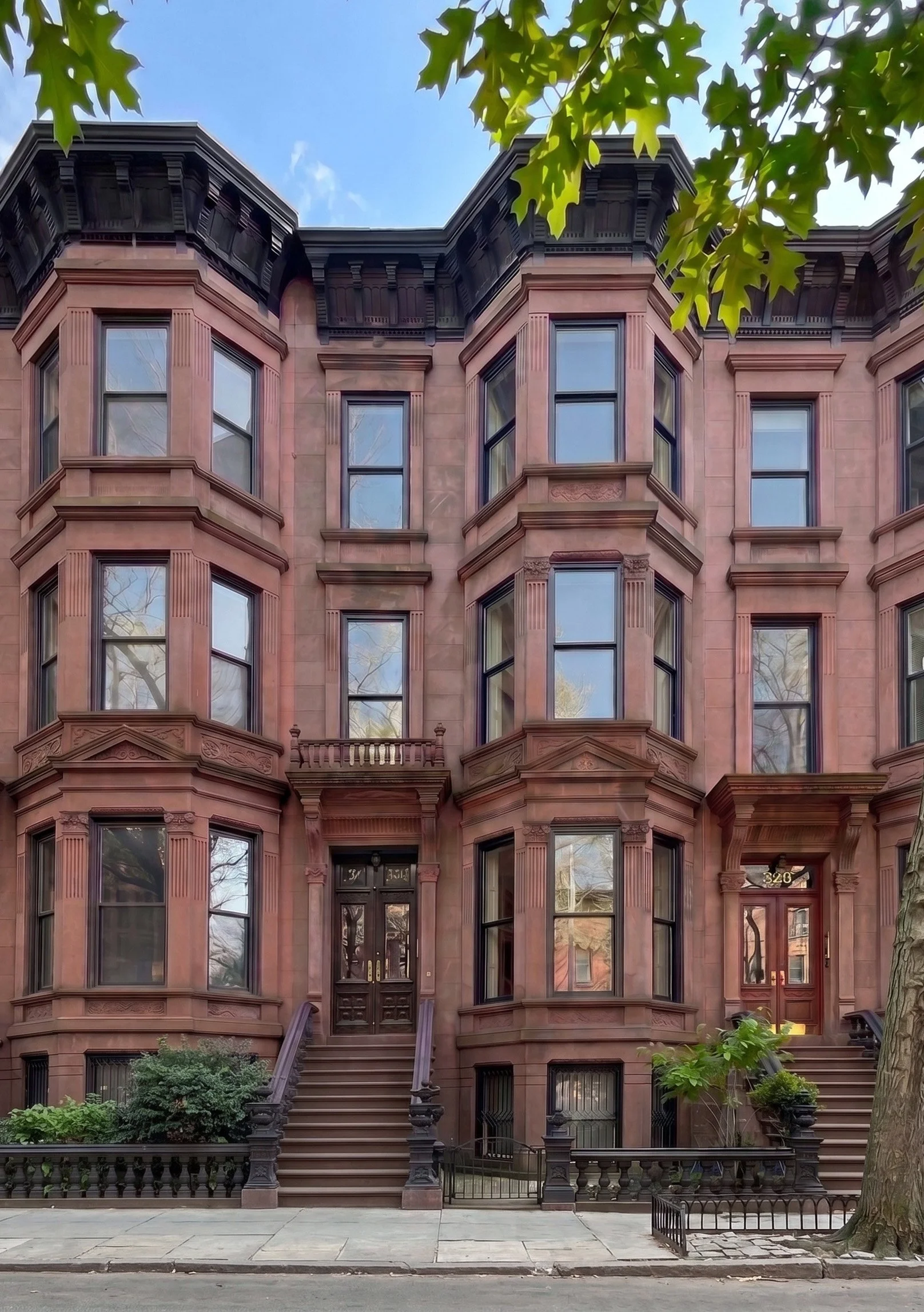
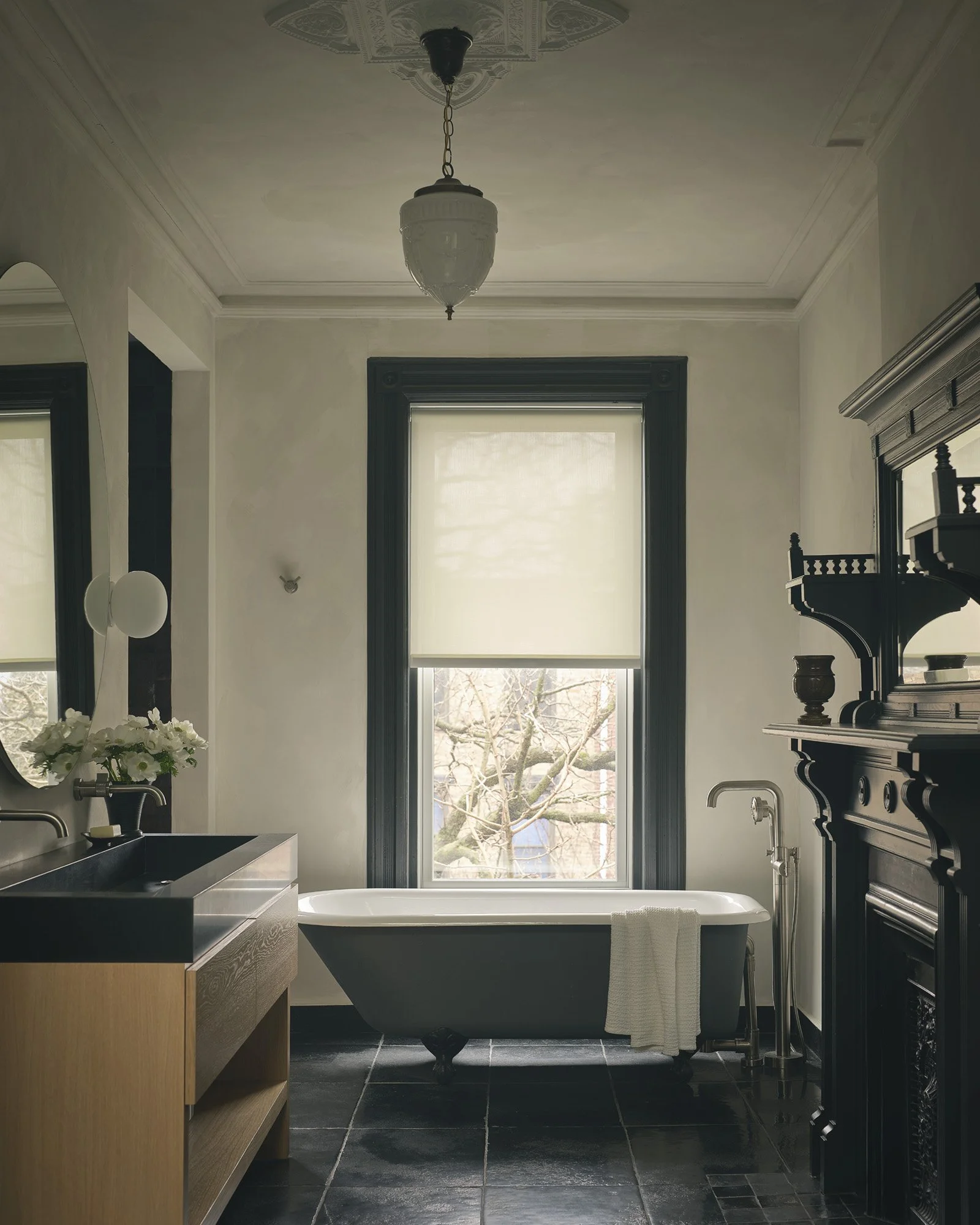
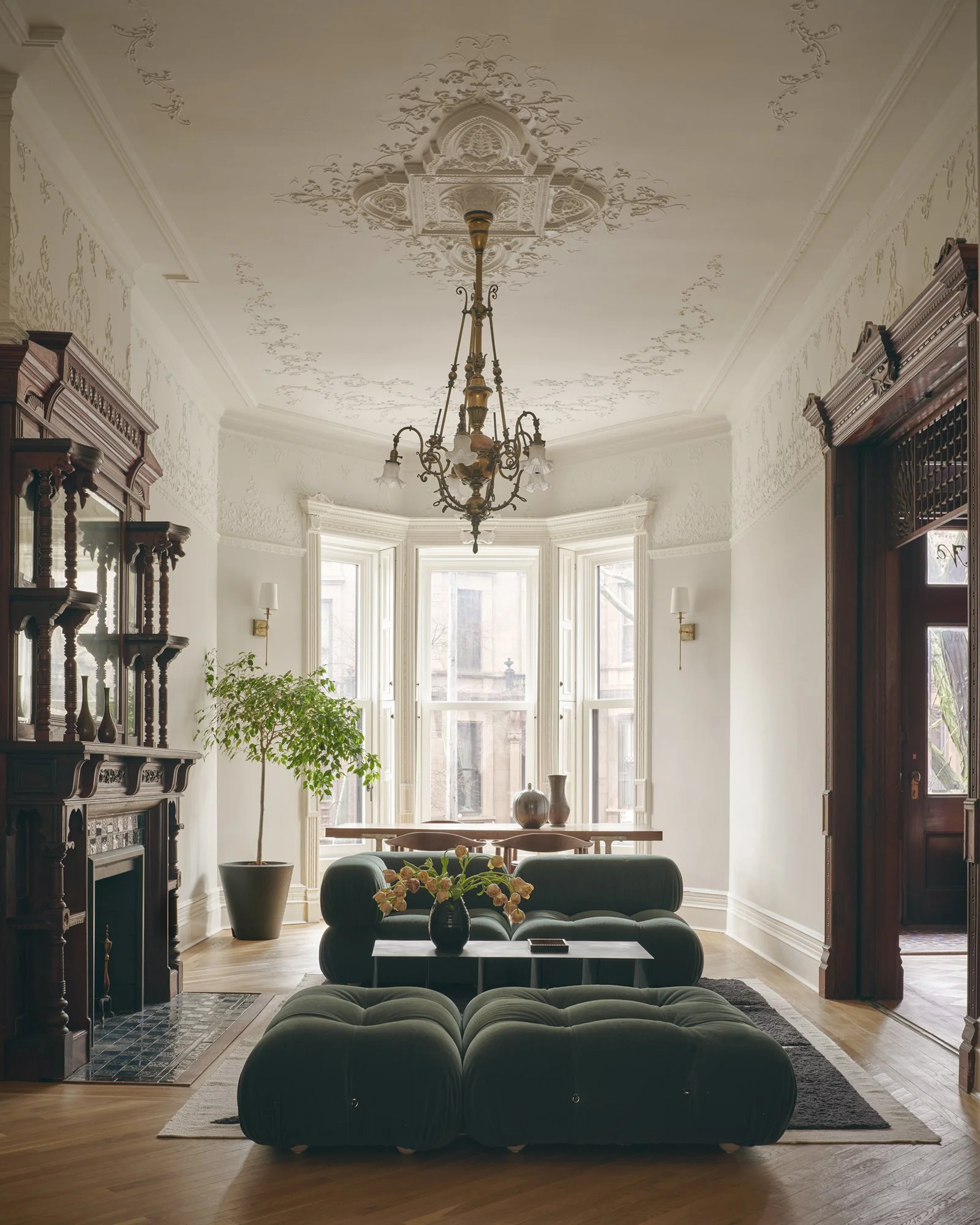
The Oculus House is a comprehensive renovation of a landmarked late-19th-century brownstone in Park Slope, Brooklyn. What makes this project special is the productive tension between preservation and intervention — one of the most rewarding aspects of working in historic homes. Many assume contemporary insertions will compete with historic fabric; we have found the opposite to be true. Done carefully, the new heightens our appreciation for the old, making the history more legible and the reading of both more powerful. Each amplifies the other: the past becomes more legible, and the new gains meaning through its relationship to what came before.
Photography by Ty Cole
The Plan
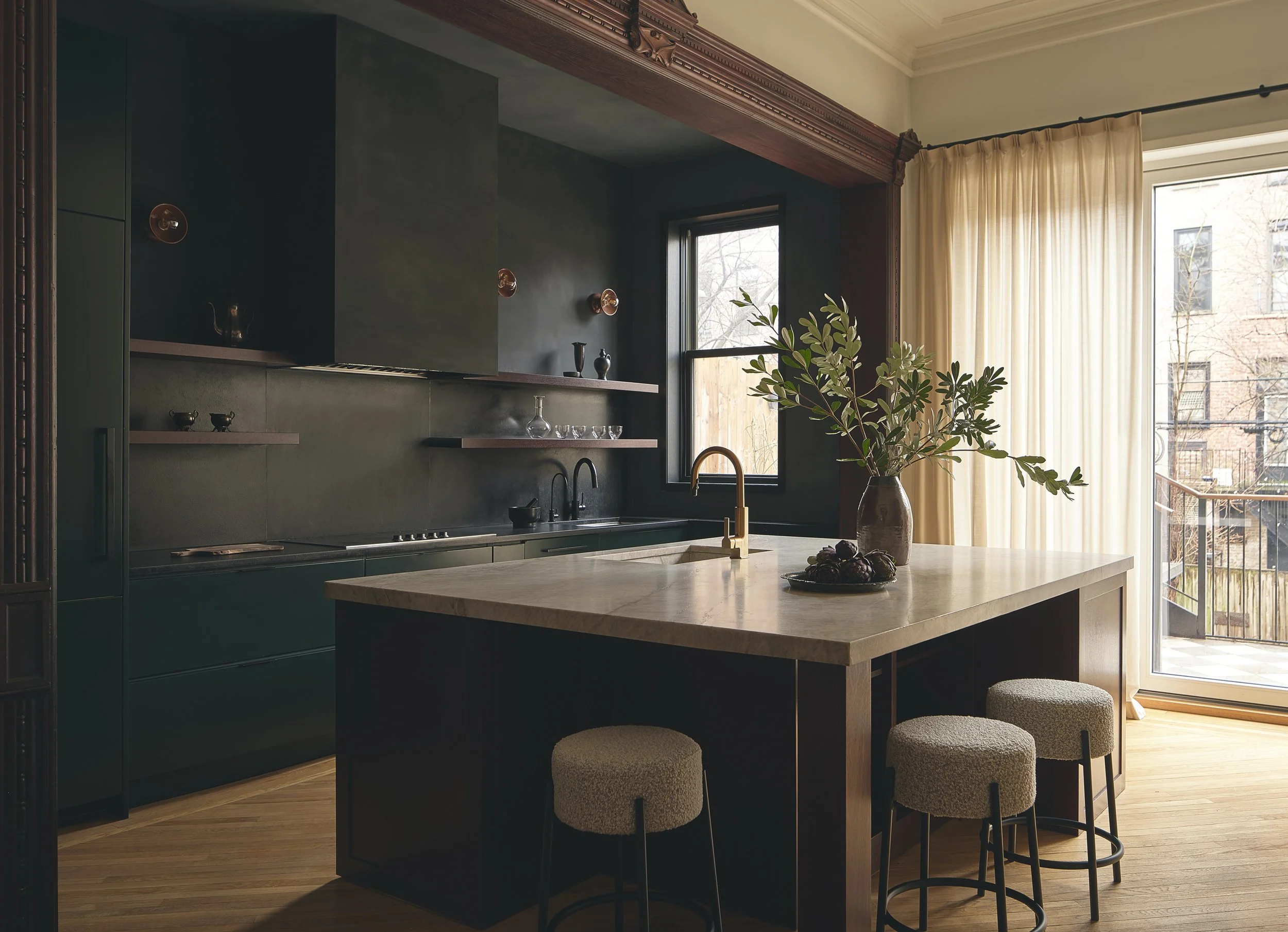
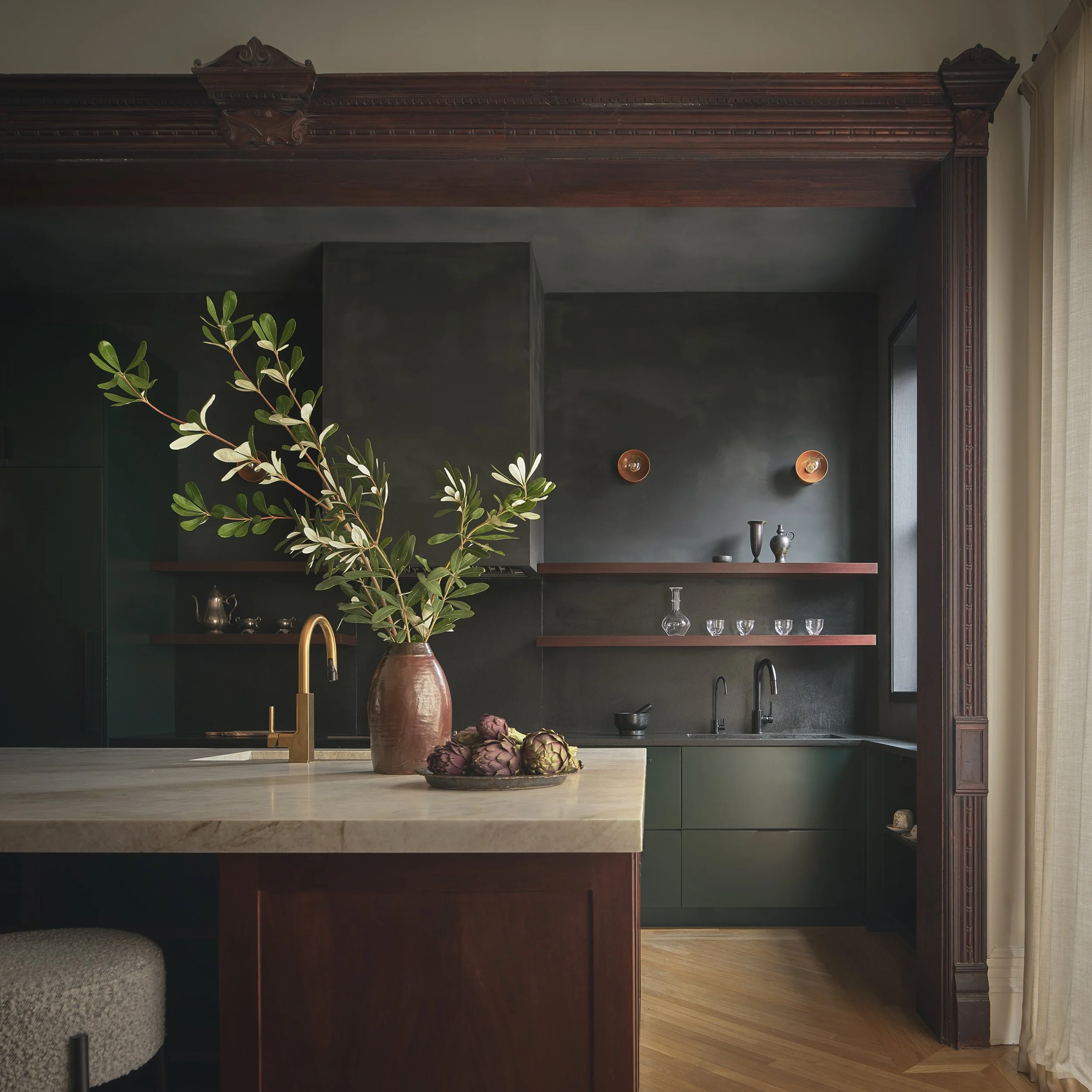
At the rear of the house, the back facade was opened to dissolve the boundary between interior and backyard, bringing daylight deep into the kitchen for the first time. The kitchen itself — dark and richly layered with deep forest green cabinetry, blackened walls, warm walnut shelving, and brass details — reads as a dramatic counterpoint to that openness, grounding the space in material weight even as light pours in from the rear.
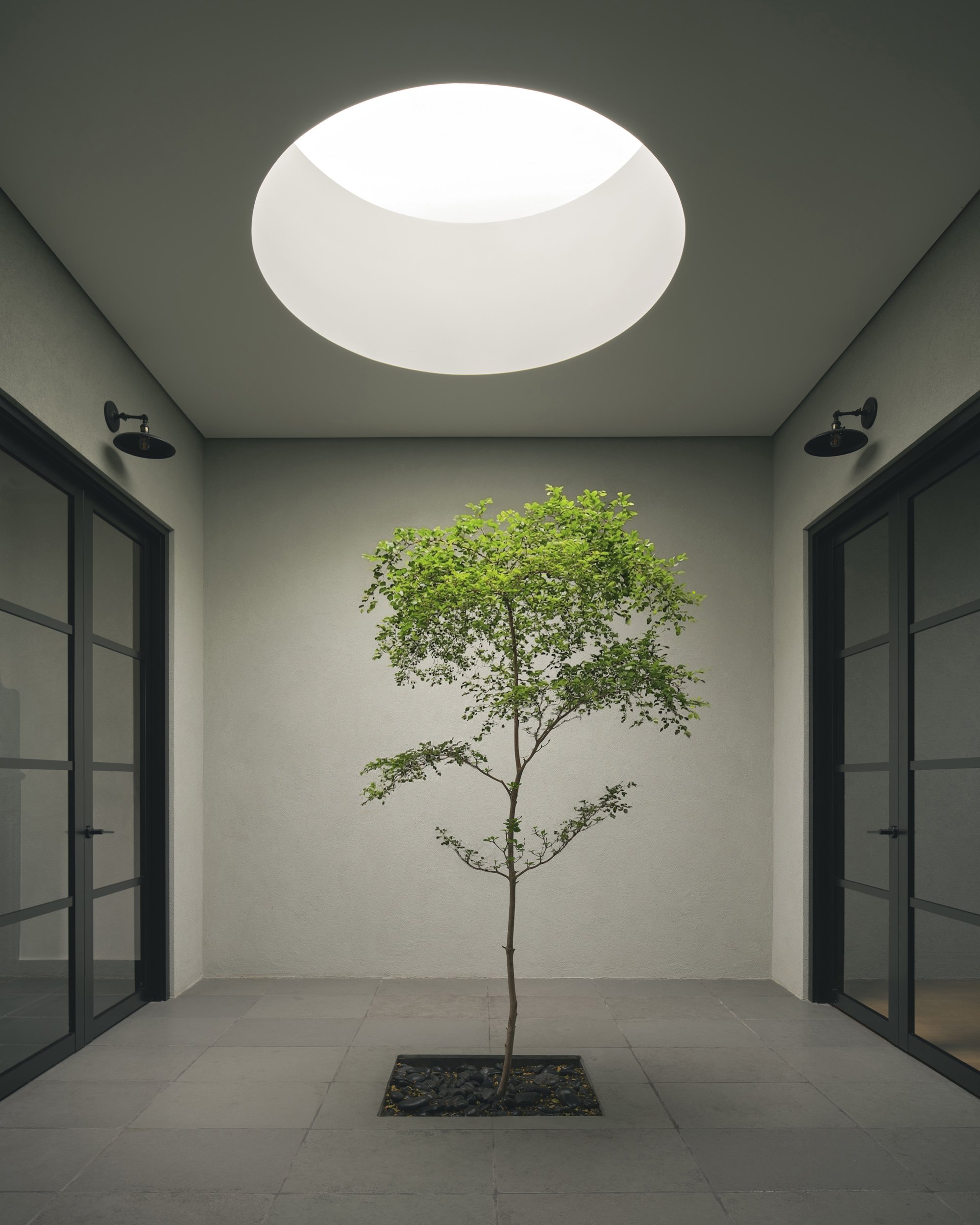
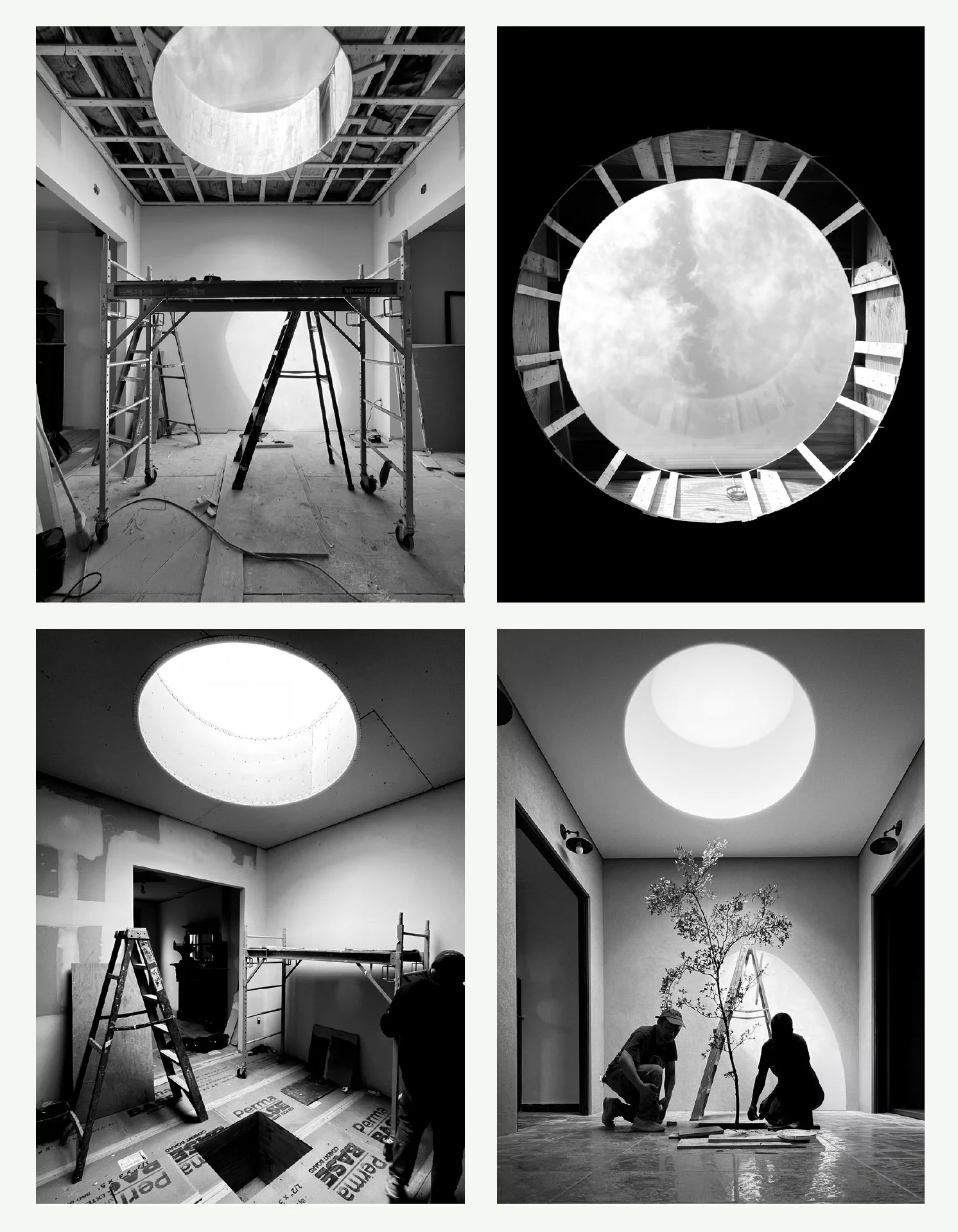
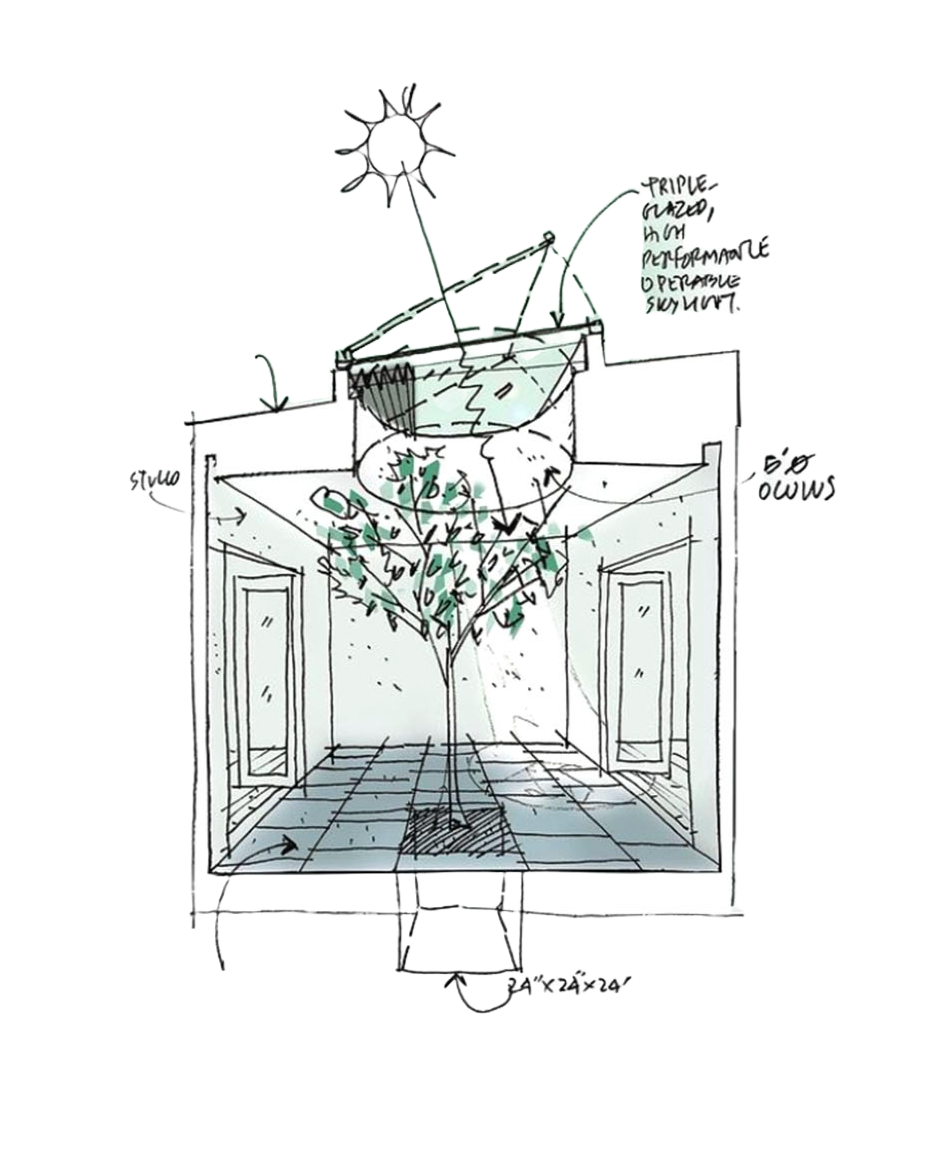
The second, and more radical move, defines the entire upper level. A room was carved into the primary suite and given to the sky. A large circular skylight, triple-glazed and mechanically operable, punctures the roof of this landmarked home. A black olive tree grows from a recessed pit in the slate floor, while plastered walls and stone dissolve the line between architecture and nature. When the skylight opens, the sounds and breezes of the city enter freely — the room becomes something closer to a courtyard than a bedroom suite. It is a contemplative, almost meditative heart to the home: a literal puncture through a century of history to bring the sky inside.
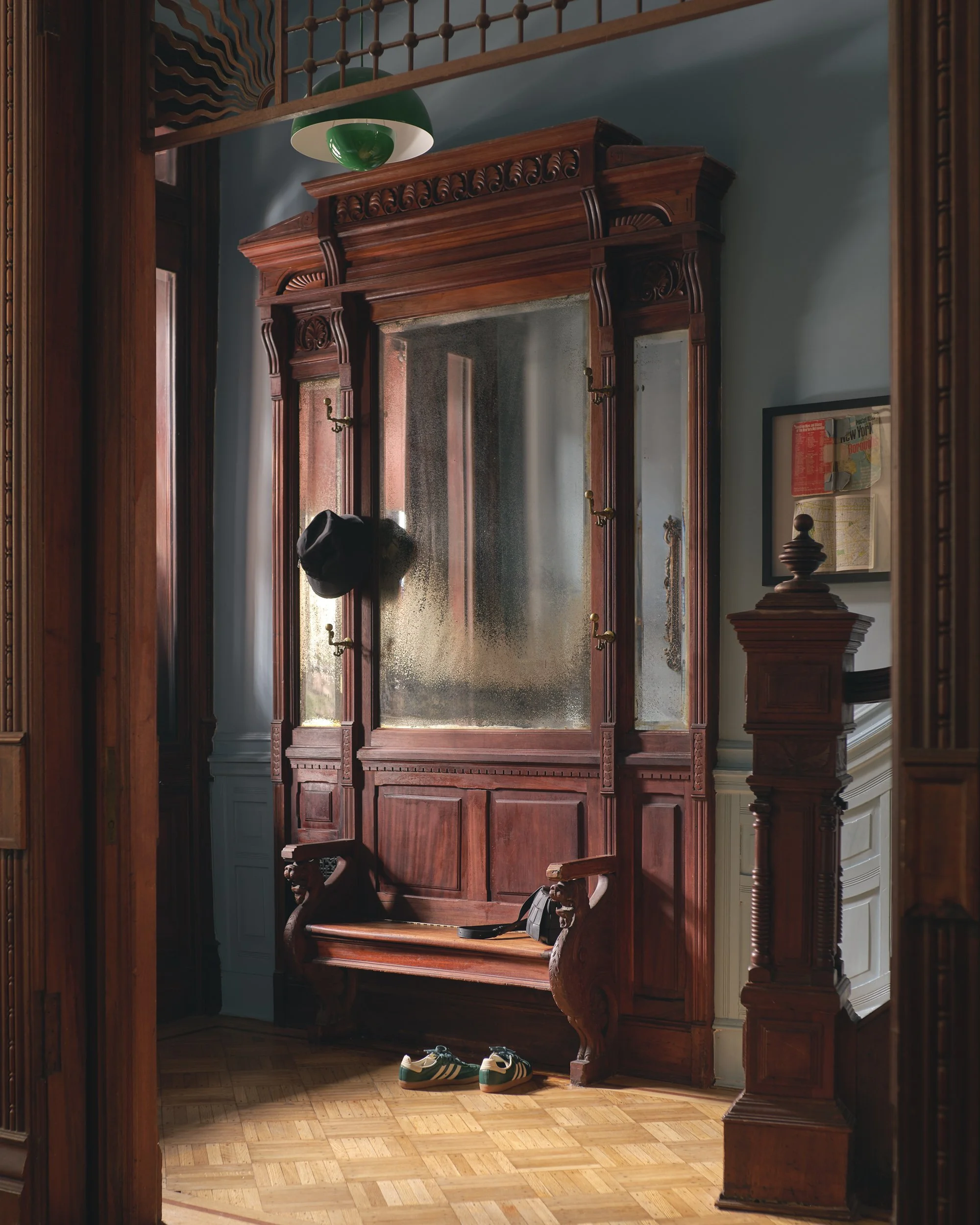
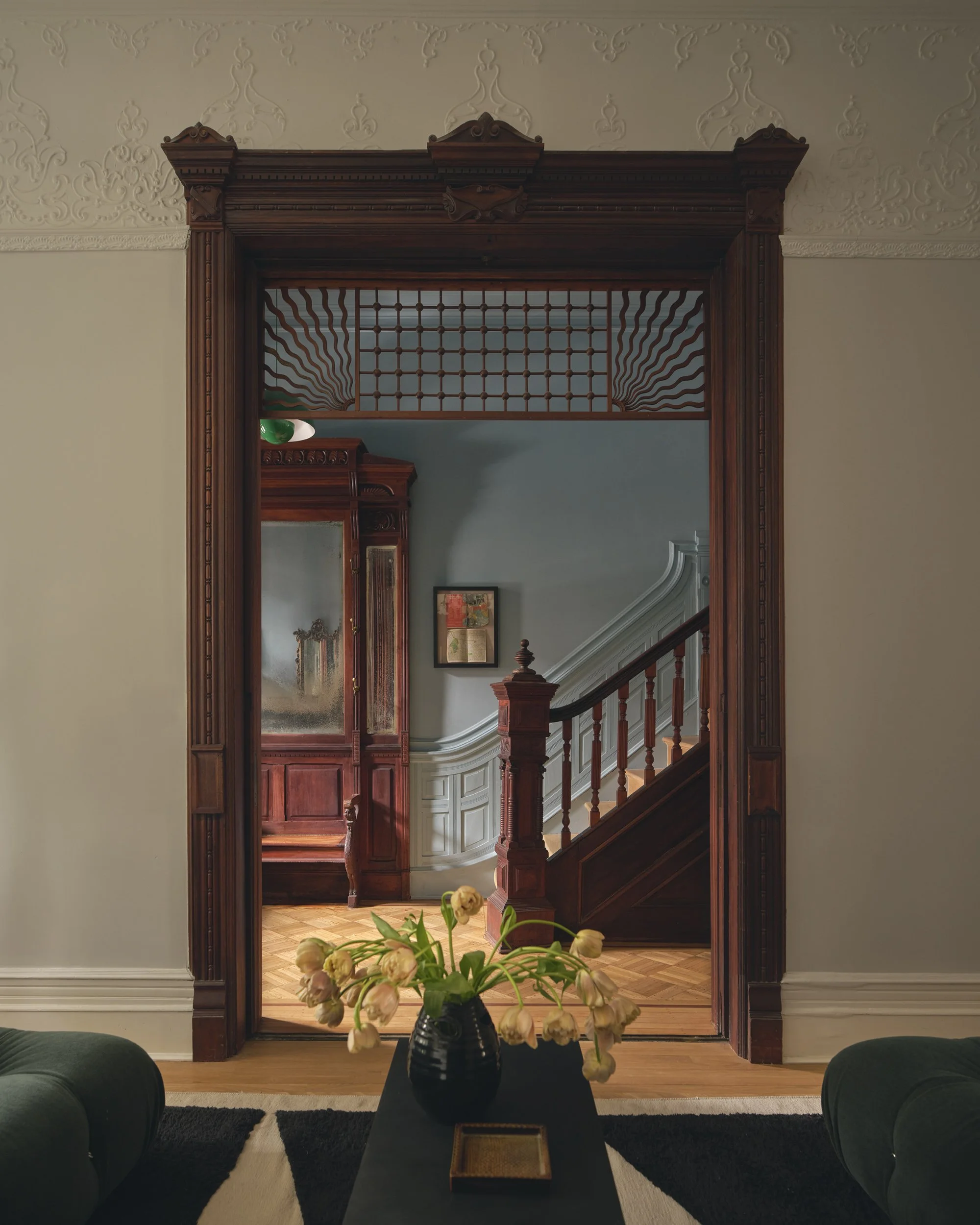
The client, fashion designer Lusha Wang, brought a sharp and collaborative artistic sensibility to every room. Color becomes the instrument through which the owner maps the emotional geography of the house. The parlor floor breathes in traditional white. The kitchen descends into darkness and richness. The stairwell is wrapped in a dusty atmospheric blue that sets the original dark mahogany banister ablaze by contrast. Each room is its own world; together, they form a coherent whole.
Sustainability
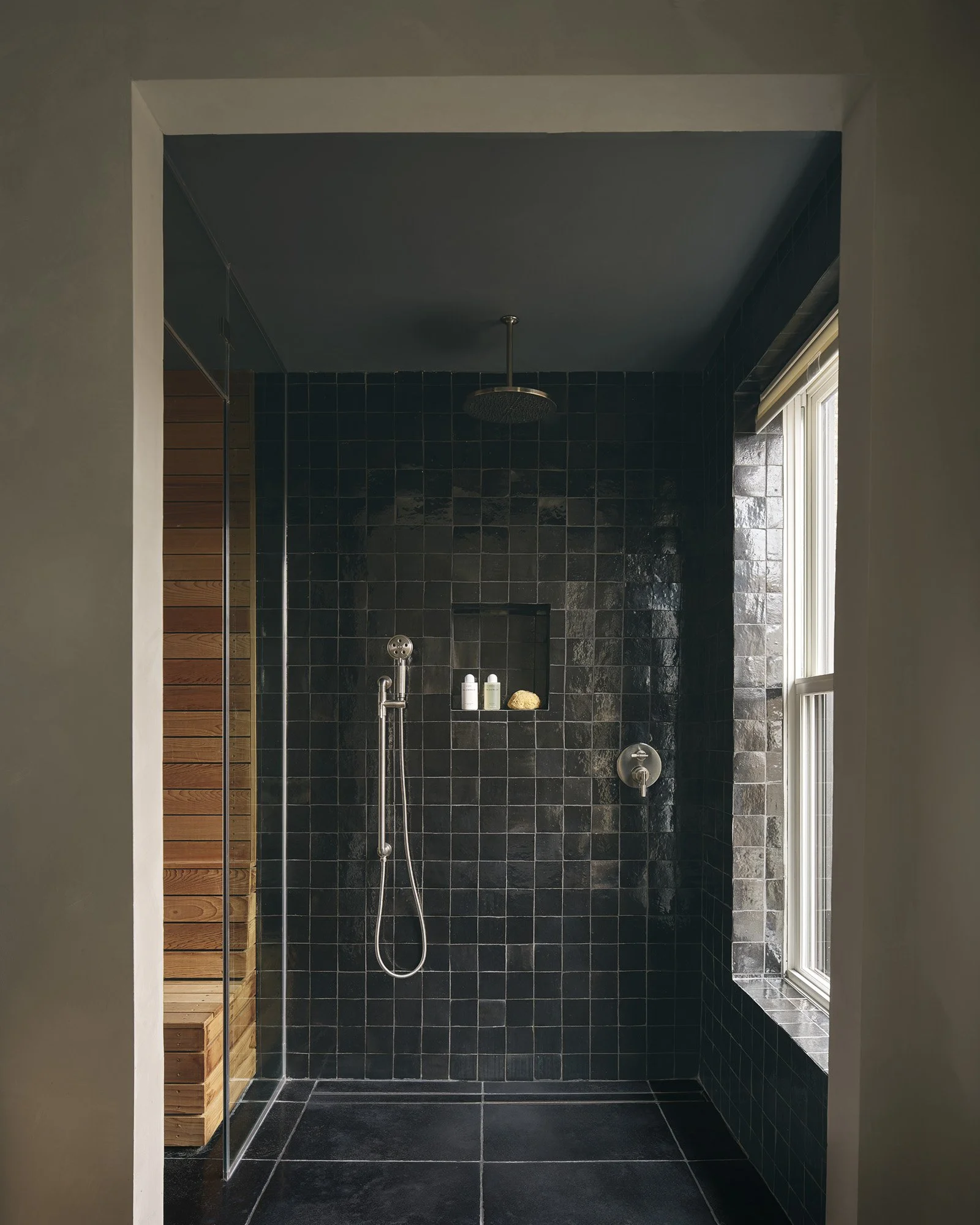
Underneath this dialogue between old and new is an equally serious commitment to performance. Energy efficiency and indoor air quality were treated as inseparable from caring for a historic building. The envelope was insulated well beyond code; historic double-hung windows were replaced with Landmarks-approved, high-performance triple-glazed units. A heat-pump system handles all heating and cooling, complemented by high-efficiency heat-pump water heaters and an all-electric interior. Low-VOC paints and finishes ensure the air inside is as carefully considered as the light. The Oculus House is ultimately a story about trusting a historic building enough to put something contemporary beside it — each side amplifying the other.